The Bay Area's Hidden Classical Music Tradition
By Choupak Piano Studio
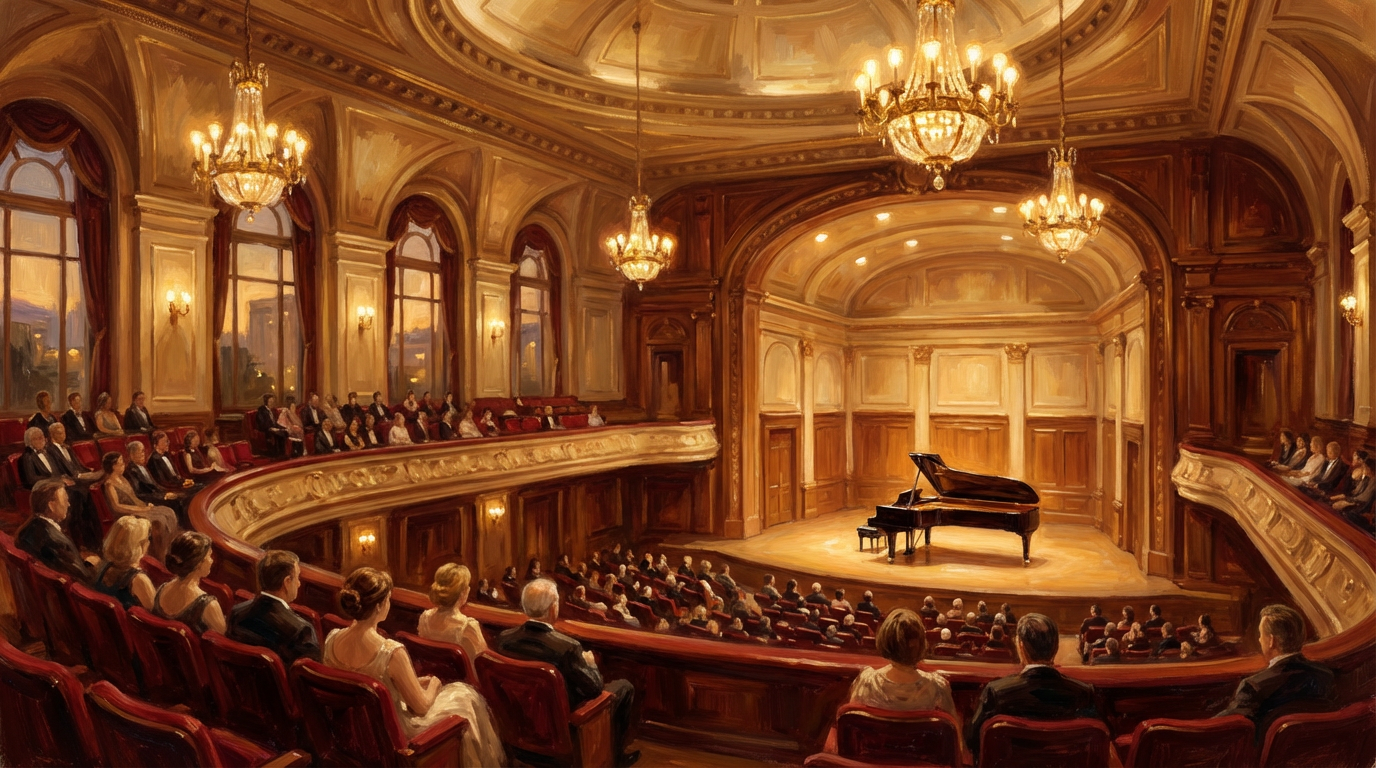
When people think of the San Francisco Bay Area, classical music usually isn’t the first association. Technology, innovation, venture capital — that’s the regional brand. But beneath the surface of Silicon Valley lies one of the most vibrant and demanding classical music communities in the United States, and understanding it helps explain why this is such a remarkable place to study piano.
An Unlikely Music Capital
The Bay Area’s classical music infrastructure is striking for a region that doesn’t market itself as a music capital. The San Francisco Symphony and San Francisco Conservatory of Music are world-class institutions, but the real depth of the ecosystem lies further south, in the suburban communities of the Peninsula and South Bay.
Cities like Cupertino, Saratoga, Palo Alto, and Fremont are home to an extraordinary concentration of serious young musicians. The local branches of MTAC (Music Teachers’ Association of California) and CAPMT (California Association of Professional Music Teachers) run some of the most competitive student events in the state. CM exams, branch recitals, solo competitions, and concerto programs draw hundreds of students every year, many of them performing at levels that would be impressive anywhere in the country.
This isn’t an accident. It’s the product of several converging forces.
Immigration and Musical Heritage
One of the defining features of the Bay Area’s music community is its deep connection to immigrant traditions where classical music education is highly valued. Families from China, Korea, India, Russia, and Eastern Europe have brought with them a cultural emphasis on rigorous musical training that has profoundly shaped the local landscape.
In many of these traditions, piano study isn’t a casual extracurricular — it’s an essential part of a child’s education, pursued with the same seriousness as academics. This cultural context has created a student population that is remarkably motivated and a parent community that understands and supports the demands of serious study.
The teaching community reflects this diversity as well. Many of the Bay Area’s most accomplished piano teachers trained at conservatories in Moscow, Shanghai, Seoul, and other major music centers before establishing studios here. This means that students in Cupertino or San Jose often have access to the same caliber of teaching that was once available only in the world’s great music capitals.
The MTAC and CAPMT Ecosystem
For families navigating the Bay Area music scene, two organizations shape much of the experience: MTAC and CAPMT.
MTAC’s Certificate of Merit (CM) program provides a structured curriculum of technique, theory, ear training, and repertoire that gives students clear benchmarks at each level. The program is rigorous — particularly at the advanced levels — and provides a framework that helps both teachers and parents track meaningful progress.
CAPMT hosts competitions and performance opportunities that push students to a higher level of preparation. The CAPMT annual competition, in particular, draws some of the strongest young pianists in Northern California. For students who are serious about their development, these events are formative: they learn to prepare under pressure, to perform for critical audiences, and to measure themselves against their peers.
Both organizations also foster a teaching community. Branch meetings, workshops, and masterclasses give teachers opportunities to share ideas, hear each other’s students, and stay connected to the broader pedagogical conversation. In a profession that can be isolating — many of us teach alone in private studios — this community is invaluable.
The Stanford and Berkeley Connection
The presence of Stanford and UC Berkeley adds another dimension to the region’s musical life. Both universities maintain active music departments, host concert series, and attract visiting artists who perform and give masterclasses in the area. For advanced students considering music as a serious pursuit, this proximity to university-level music-making provides inspiration and, sometimes, opportunity.
Stanford’s music department, in particular, has a long history of engaging with the local community. Pre-college students in the area benefit from an environment where high-level musical activity is happening nearby, even if they’re not yet part of it directly.
What This Means for Families
For parents in Cupertino and the surrounding communities, this rich musical infrastructure is both an opportunity and a challenge. The opportunity is clear: your child has access to exceptional teachers, structured programs, and performance opportunities that would be the envy of most American cities. The challenge is navigating it all — choosing the right teacher, deciding which programs to pursue, and maintaining a healthy balance between musical ambition and everything else in a student’s life.
A few things are worth keeping in mind:
- The depth of talent here is real. Students in Bay Area competitions and exams are performing at a very high level. This can be intimidating, but it’s also motivating. Students who grow up in this environment develop standards that serve them well.
- Community matters. The best musical education doesn’t happen in isolation. Recitals, masterclasses, and even friendly rivalries with peers all contribute to a student’s growth. Getting involved with MTAC or CAPMT connects your family to this community.
- The tradition is alive. This isn’t a place where classical music is a museum piece. It’s a living tradition, sustained by dedicated teachers and families who believe that learning to play an instrument well is one of the most valuable things a young person can do.
A Place Worth Appreciating
It’s easy to take this for granted when you live here. The Bay Area’s tech identity is so dominant that the classical music tradition operating alongside it can feel invisible. But for those of us who teach and perform in this community, it’s something worth recognizing — and protecting.
The students we work with are part of a tradition that spans continents and generations. The six-year-old sitting down for her first lesson in Cupertino is, in a real sense, connected to the conservatories of Moscow and Shanghai, to the concert halls of San Francisco and Vienna, and to a centuries-old belief that music matters. That’s a remarkable thing.
Choupak Piano Studio is part of the Bay Area’s classical music community, with active involvement in MTAC and CAPMT. Learn more about our teachers and their background, or contact us to find out how we can support your child’s musical journey.