Acoustic Piano vs Digital Piano: What Your Child Actually Needs
By Choupak Piano Studio
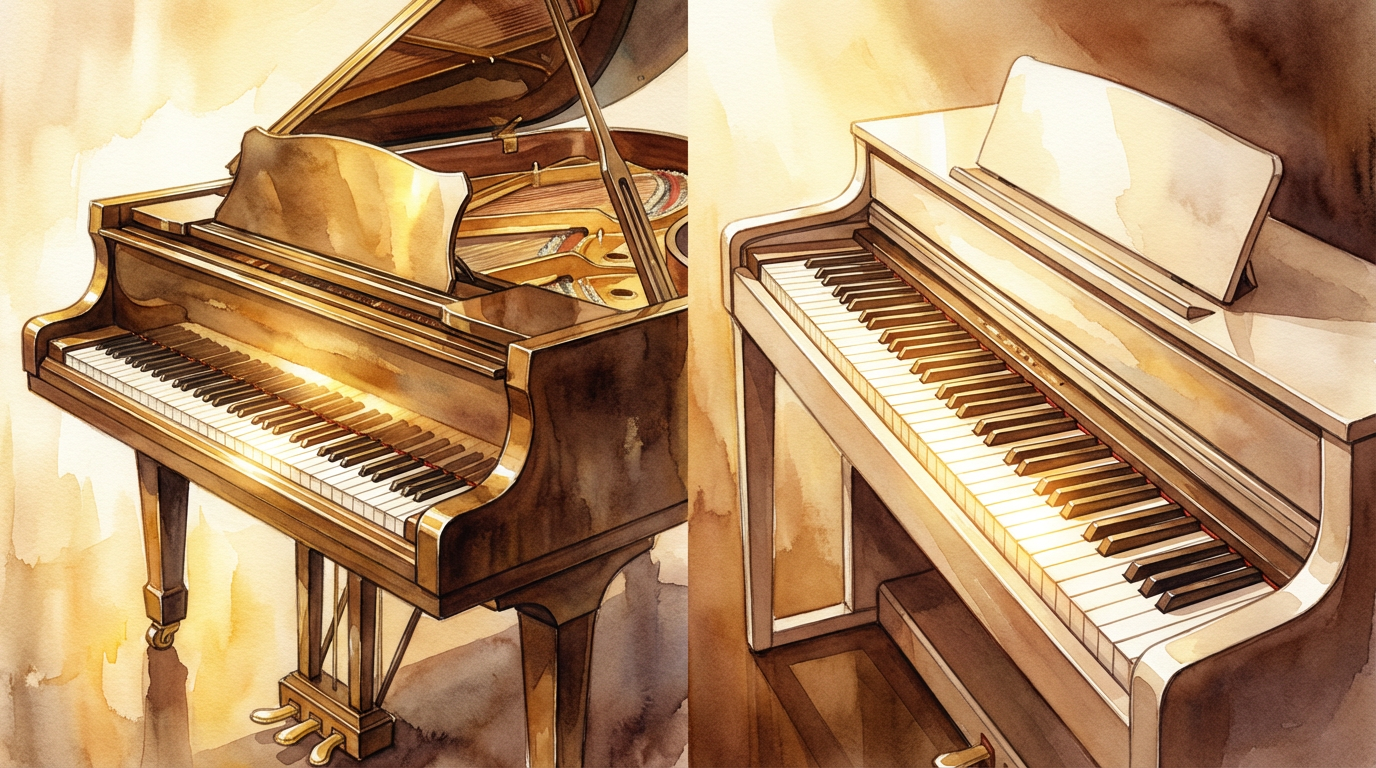
One of the most common questions parents ask before or shortly after starting lessons is about the instrument at home. Do we need a “real” piano, or will a digital piano work? The answer depends on where your child is in their development — and on what you mean by “work.”
We’ll be straightforward: there is no perfect substitute for an acoustic piano. But we also live in the real world, where budgets, apartment leases, and noise-sensitive neighbors are all factors. Here’s how we think about it.
Why the Instrument Matters
The piano is unusual among instruments because the student doesn’t produce the sound directly — they produce it through a mechanical action. When a pianist presses a key on an acoustic piano, a hammer strikes a string, and the quality of the resulting sound depends on how the key was pressed: the speed, the weight, the angle of approach, the follow-through.
This is the heart of piano technique. In the Russian tradition, we teach students from the very first lesson to listen to the sound they’re producing and to control it through touch. Arm weight, wrist flexibility, finger articulation — all of these affect tone in ways that are immediately audible on an acoustic instrument.
On a digital piano, this feedback loop is compressed or absent. Most digital pianos use velocity sensitivity — they get louder when you press harder — but they don’t respond to the subtleties of touch that distinguish a singing tone from a percussive one. A student can press a key with a tense, rigid finger or with a relaxed, weighted arm, and on many digital instruments, the result sounds nearly identical.
This matters because technique developed on an unresponsive instrument tends to become mechanical. Students learn to press keys rather than to shape sound. When they eventually sit down at an acoustic piano — for a lesson, a recital, or an exam — they discover that none of the tonal control they need has been developed.
What We Recommend at Each Stage
Absolute beginners (first 6-12 months): A quality digital piano with weighted keys is acceptable. At this stage, the student is developing basic coordination, learning to read music, and building practice habits. A full-size digital piano with 88 weighted keys and a proper bench provides a workable practice environment.
The key word is weighted. An unweighted keyboard — the kind with small, springy keys that feel like typing — is not suitable for piano study at any level. The touch has no relationship to what the student will encounter on a real piano, and it actively undermines the development of proper technique.
Intermediate students (after the first year): An acoustic piano becomes increasingly important. As students begin working on more expressive repertoire, they need an instrument that responds to their touch. Dynamics, pedaling, voicing between hands — these are skills that simply cannot be developed on most digital instruments.
This is also the stage where students prepare for CM exams and recitals, which are always performed on acoustic pianos. A student who practices exclusively on a digital instrument is at a genuine disadvantage in these settings.
Advanced students: An acoustic piano is essential. There is no digital instrument that adequately replicates the tonal range, the dynamic control, or the mechanical responsiveness that advanced repertoire demands. A student preparing for competitions or conservatory auditions needs daily access to a well-maintained acoustic piano.
The Practical Reality
We understand that acoustic pianos are expensive, heavy, and require maintenance. Here are some practical considerations:
Used uprights are more affordable than most people think. A well-maintained used upright from a reputable dealer can cost less than a high-end digital piano. In the Bay Area, there’s an active market for used pianos — families whose children have stopped playing, estates, studios upgrading their instruments. A good technician can assess an instrument’s condition before you buy.
Not all uprights are created equal. A cheap, old upright with worn hammers and dead strings is worse than a good digital piano. If you’re buying used, have it inspected by a piano technician. The action should be responsive, the tuning should hold, and the tone should be even across the keyboard.
A digital piano is better than no piano. If an acoustic instrument isn’t feasible right now, a quality digital piano with fully weighted hammer action is a reasonable starting point. Yamaha’s CLP series and Roland’s HP series are among the options that provide a touch and sound that, while not equivalent to an acoustic, are serviceable for early study.
Tuning and maintenance matter. An acoustic piano should be tuned at least twice a year. A piano that’s significantly out of tune undermines a student’s ear development — they learn to tolerate sounds that shouldn’t be tolerated. Budget for regular tuning when you budget for the instrument.
What About Headphone Practice?
This is one area where digital pianos have a genuine advantage. For families in apartments or with late-practice schedules, the ability to practice through headphones is valuable. Some acoustic pianos can be fitted with silent systems that allow headphone practice, though these add cost and slightly alter the action.
If headphone practice is your primary reason for considering a digital piano, it’s worth exploring the silent-system option for an acoustic instrument. You get the real touch and sound when the system is off, with the flexibility of quiet practice when needed.
Our Honest Recommendation
If you’re just beginning and an acoustic piano isn’t immediately feasible, start with the best digital piano you can afford — one with fully weighted keys, 88 keys, and a dedicated stand and bench. Plan to transition to an acoustic instrument within the first year or two as your child’s commitment and ability develop.
If you can start with an acoustic piano, do. Even a modest upright provides a qualitative learning experience that no digital instrument matches. Your child will develop better ears, better touch, and better habits from day one.
The instrument is not a minor detail in piano education. It’s a partner in the learning process. The better the partner, the more the student can grow.
Need advice on choosing an instrument? We’re happy to discuss options that fit your family’s needs and budget. Contact us to talk it through.