Benefits of Classical Piano Training for Children
By Choupak Piano Studio
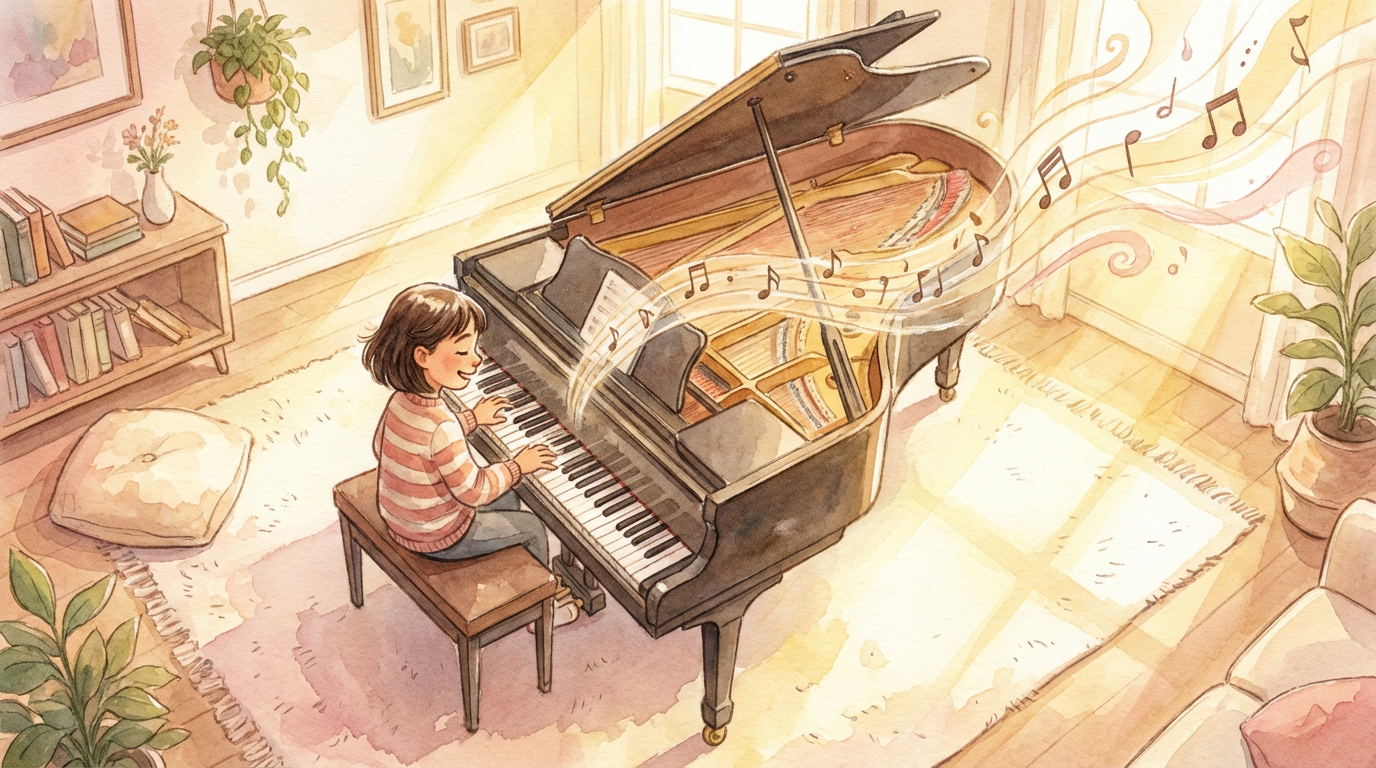
Parents often ask us what their children will really get out of piano lessons — beyond learning to play songs. It’s a fair question. Piano lessons are a significant investment of time and money, and the benefits should extend well beyond the instrument itself.
After more than 20 years of teaching, we can say with confidence: classical piano training is one of the most powerful developmental experiences a child can have. Here’s why.
Cognitive Development
Working Memory and Executive Function
Learning piano requires students to process multiple streams of information simultaneously — reading notes on a staff, coordinating both hands independently, maintaining rhythm, listening to tone quality, and following musical structure. This kind of multi-tasking strengthens working memory and executive function skills that transfer to academic performance.
Research published in the Journal of Neuroscience and other peer-reviewed publications has consistently shown that children who study music demonstrate enhanced performance in mathematics, reading comprehension, and spatial reasoning compared to peers who don’t.
Pattern Recognition and Analytical Thinking
Classical music is built on patterns — harmonic progressions, melodic sequences, formal structures. Students who learn to identify and understand these patterns develop analytical thinking skills that serve them in mathematics, science, and any field that requires systematic reasoning.
Fine Motor Coordination
Piano technique requires extraordinary precision in finger movement, hand position, and physical coordination. Developing this level of fine motor control at a young age has lasting benefits for handwriting, typing, and any activity requiring manual dexterity.
Discipline and Work Ethic
Learning to Practice
Perhaps the most important skill piano students develop is the ability to practice effectively. This means setting goals, breaking complex tasks into manageable steps, identifying weaknesses, and working on them systematically. These are exactly the skills that drive success in school, sports, and eventually, careers.
A student who learns to sit down daily and work through a challenging passage until they master it has developed a capacity for sustained effort that most children never build.
Delayed Gratification
In an era of instant everything, piano teaches children that meaningful achievement takes time. A student might spend weeks or months preparing a single piece for performance. The sense of accomplishment that comes from that sustained effort — and eventually performing the piece well — is deeply rewarding and builds resilience.
Performing Under Pressure
Recitals, exams, and competitions put students in high-pressure situations where they must perform what they’ve prepared. This experience builds confidence, poise, and the ability to manage anxiety — skills that serve students in academic presentations, job interviews, and countless other contexts throughout life.
Emotional Intelligence and Expression
A Language for Emotion
Music provides a vocabulary for emotional expression that words sometimes can’t. When a student plays a Chopin nocturne with genuine feeling, they’re accessing and communicating emotions in a sophisticated way. This kind of emotional literacy contributes to empathy, self-awareness, and social intelligence.
Listening Skills
Classical piano training develops deep listening — the ability to hear nuances in tone, dynamics, and phrasing. Students learn to listen not just to themselves but to the music around them. This translates to better interpersonal listening skills and an enhanced appreciation for subtlety in communication.
Creativity Within Structure
Classical music operates within formal structures — sonata form, fugue, rondo. Students learn to be creative and expressive within these frameworks, which mirrors how creativity works in most real-world contexts. The best ideas usually emerge not from total freedom but from working creatively within constraints.
Cultural Literacy
Connection to a Centuries-Old Tradition
Studying classical piano connects children to a cultural tradition spanning centuries — from Bach’s counterpoint to Chopin’s romanticism to Debussy’s impressionism. This cultural literacy enriches their understanding of history, art, and human expression in ways that extend far beyond the piano bench.
Appreciation for Excellence
Exposure to masterworks of the piano repertoire teaches children what excellence looks like. When a student studies a Beethoven sonata, they’re engaging with one of the greatest achievements of human creativity. This sets a high bar for quality and craftsmanship that influences how they approach their own work in any domain.
Social and Personal Benefits
Confidence
Students who perform regularly — whether at studio recitals, competitions, or school events — develop genuine confidence rooted in competence. They know they can prepare for something difficult and deliver when it matters.
Community
Serious piano students often find a community of like-minded peers through competitions, festivals, and group events. In the Bay Area, organizations like MTAC and CAPMT provide this kind of community, and the friendships formed through shared musical experiences can last a lifetime.
A Lifelong Skill
Unlike many childhood activities, piano is something students can enjoy for their entire lives. The skills learned in childhood — reading music, understanding harmony, physical coordination — stay with them. Many of our former students tell us that playing piano remains one of their greatest sources of joy and relaxation as adults.
The Choupak Approach
At Choupak Piano Studio, we believe classical piano training should develop the whole musician — not just technical facility, but musicality, discipline, and a genuine love for the art. Our curriculum is designed to build all of these qualities progressively, from the very first lesson through advanced study.
If you’re considering piano lessons for your child, we’d love to tell you more about our approach. Explore our programs or contact us to discuss your student’s goals.