What Age Should a Child Start Piano Lessons?
By Choupak Piano Studio
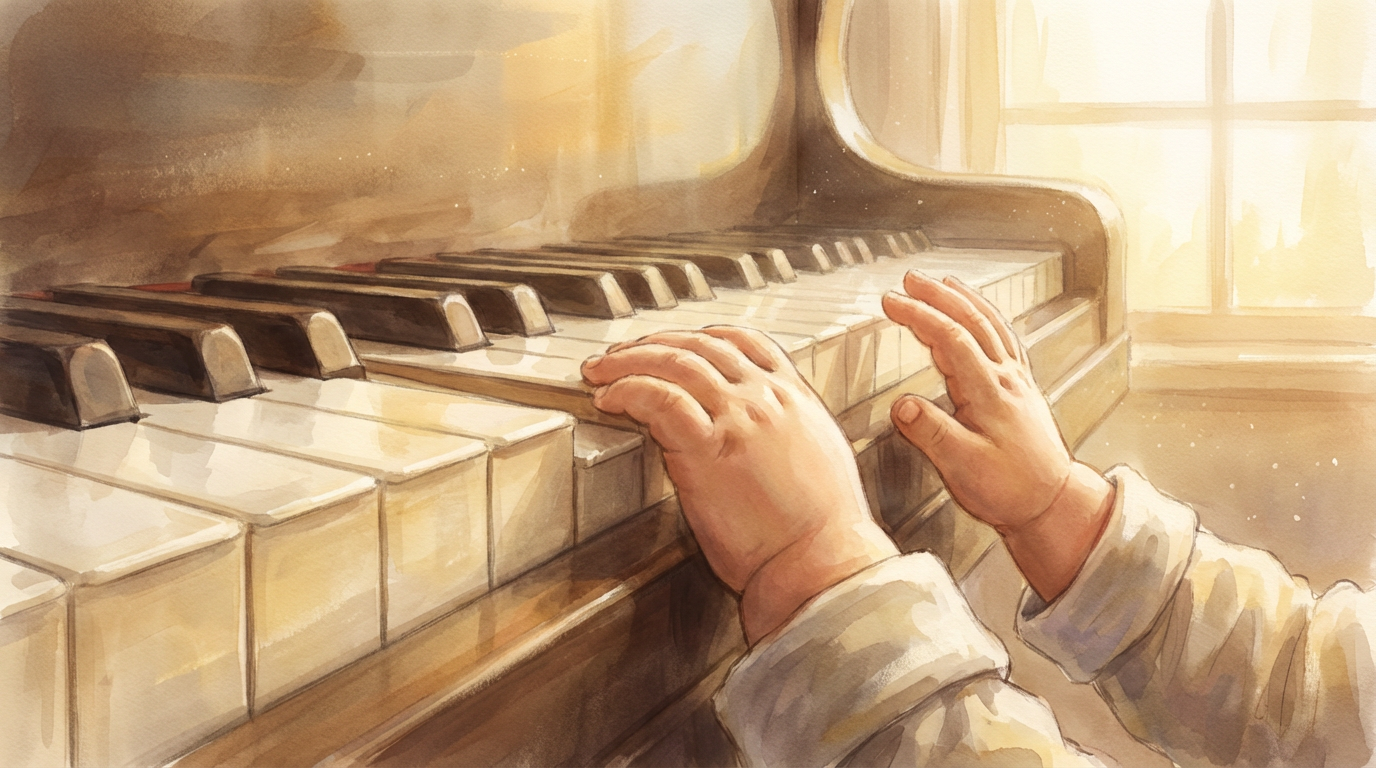
It’s one of the first questions parents ask: how old should my child be to start piano lessons?
The internet is full of answers, most of them landing somewhere between five and seven. That range isn’t wrong, but it’s not particularly helpful either. Age is a rough proxy for what actually matters, which is readiness — and readiness varies enormously from child to child.
What Readiness Actually Looks Like
In our experience, the most reliable indicators of readiness have little to do with birthdays and everything to do with development. Here’s what we look for:
Can the child sit still and focus for 15 to 20 minutes? Piano lessons require sustained attention. A child doesn’t need to sit perfectly still — fidgeting is normal — but they need to be able to engage with a task, follow instructions, and stay with an activity long enough to make progress. If a child can sit through a story being read to them, they can usually manage a lesson.
Can they follow multi-step directions? “Put your right hand on these three keys, and play them one at a time, starting with your thumb.” That’s a multi-step instruction. A child who can process and act on that kind of direction is ready to learn at the piano. A child who needs each step isolated and repeated may benefit from waiting a few more months.
Is their hand large enough to play comfortably? This is often overlooked. Very young children sometimes have hands too small to play even adjacent keys without strain. We want a child to be able to place five fingers on five white keys with a natural, relaxed hand shape. Forcing a tiny hand into position creates tension habits that are difficult to undo later.
Are they interested? This might be the most important factor. A child who asks to play, who gravitates toward the piano at a friend’s house, who hums melodies or taps rhythms — that child is ready regardless of whether they’ve hit some arbitrary age threshold. Genuine curiosity is the best possible starting point.
The Russian Tradition and Early Training
In the Russian pedagogical tradition, there’s a strong emphasis on beginning with the right foundations rather than beginning as early as possible. The great Russian pedagogue Anna Artobolevskaïa, who specialized in teaching very young children, was careful to distinguish between exposing young children to music and formal piano instruction. She advocated for rich musical environments — singing, rhythmic games, listening — as preparation for the instrument, not as a substitute for waiting until the child’s body and mind are ready for the physical and cognitive demands of the keyboard.
This resonates with how we approach it. We’d rather a child start at six with the physical and mental readiness to build good habits from day one than start at four and spend two years working around developmental limitations.
What About Starting “Late”?
Parents sometimes worry that starting at seven or eight means their child has already fallen behind. This concern is understandable — especially in communities like Cupertino, where many children begin lessons early — but it’s largely unfounded.
A seven-year-old who starts lessons typically progresses faster than a five-year-old, simply because their cognitive and physical development allows them to absorb more in each lesson. They can read music notation more easily, understand rhythmic concepts, and develop finger coordination at a faster rate. Within a year or two, they’ve often caught up to peers who started earlier.
The students who struggle aren’t those who started at seven instead of five. They’re those who started before they were ready and developed habits — tension, poor posture, resistance to practice — that now need to be unlearned.
Pre-Lesson Musical Exposure
For families with children who aren’t quite ready for formal lessons, there’s plenty of valuable preparation that doesn’t require a teacher:
- Sing together. Singing develops pitch awareness, rhythmic sense, and the habit of listening carefully. It doesn’t matter whether the parent sings well.
- Listen to music intentionally. Not just as background noise, but as an activity. “Can you hear the piano in this piece? Does it sound happy or sad? Is it fast or slow?” These simple questions build the kind of attentive listening that will serve a student for years.
- Clap and move to rhythms. Rhythmic awareness is foundational to all music study, and it develops naturally through physical movement.
- Let them explore the piano. If you have an instrument at home, let your child play with it freely. Don’t correct them or try to teach them — just let them discover the sounds. This builds comfort and curiosity.
How We Handle It
When a parent contacts us about a child who might be on the young side, we’re honest about what we observe. If a child comes for a trial lesson and we see that they’re not quite ready, we’ll say so — and we’ll suggest what the family can do in the meantime. Starting a few months later with a child who’s ready is always better than pushing through with a child who isn’t.
Viola, who specializes in beginning students, has a particular sensitivity to this. She’s worked with hundreds of young beginners over the years, and she can usually tell within the first lesson whether a child will thrive or whether waiting would serve them better.
The Bottom Line
There’s no universal right age to start piano lessons. There is a right time — and it’s when your child is physically comfortable at the keyboard, cognitively ready to follow instruction, and genuinely interested in learning. For most children, that window falls between five and seven, but the specific child matters far more than the number.
If you’re unsure, the best thing to do is ask. A good teacher will be honest with you about whether your child is ready — and will never pressure you to start before the time is right.
Wondering whether your child is ready? Contact us to arrange a trial lesson. We’re happy to assess readiness and discuss the best path forward for your family.